
Memory foam travel neck pillow
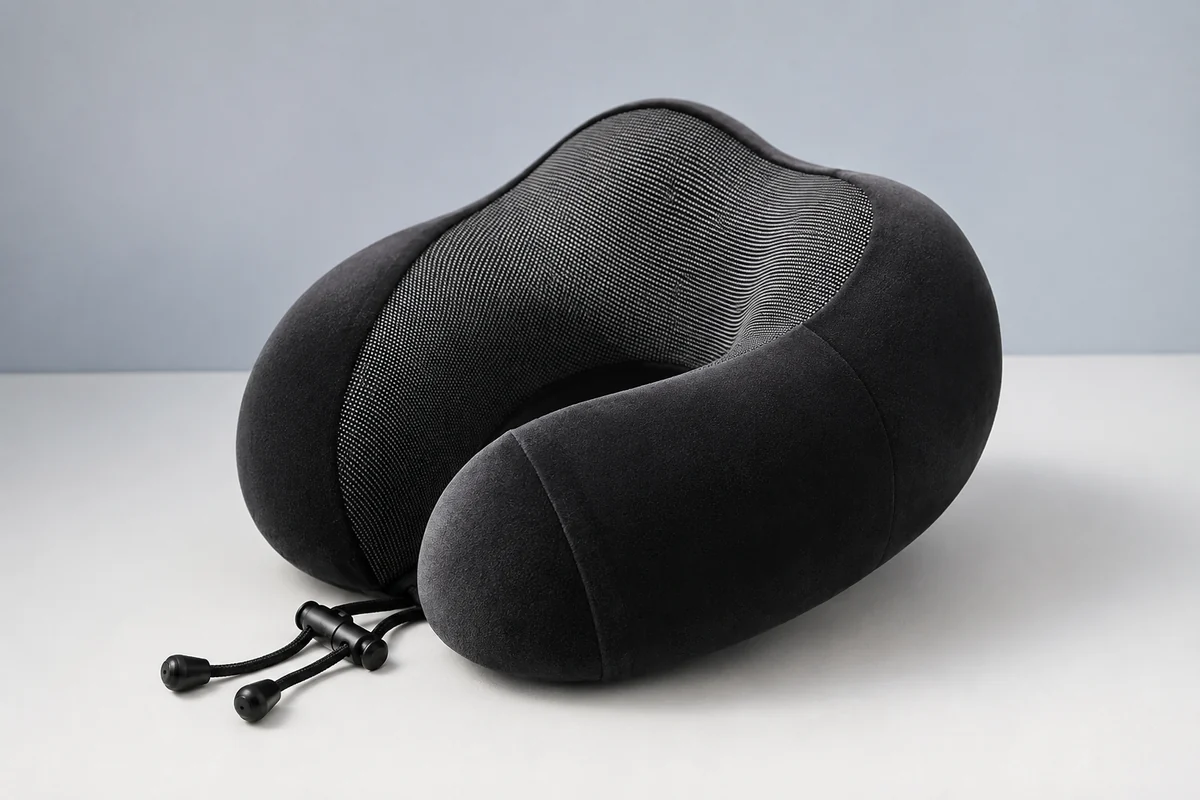
A travel pillow does one thing: it stops your head from falling when your neck muscles let go. This one carries that load instead of collapsing under it.
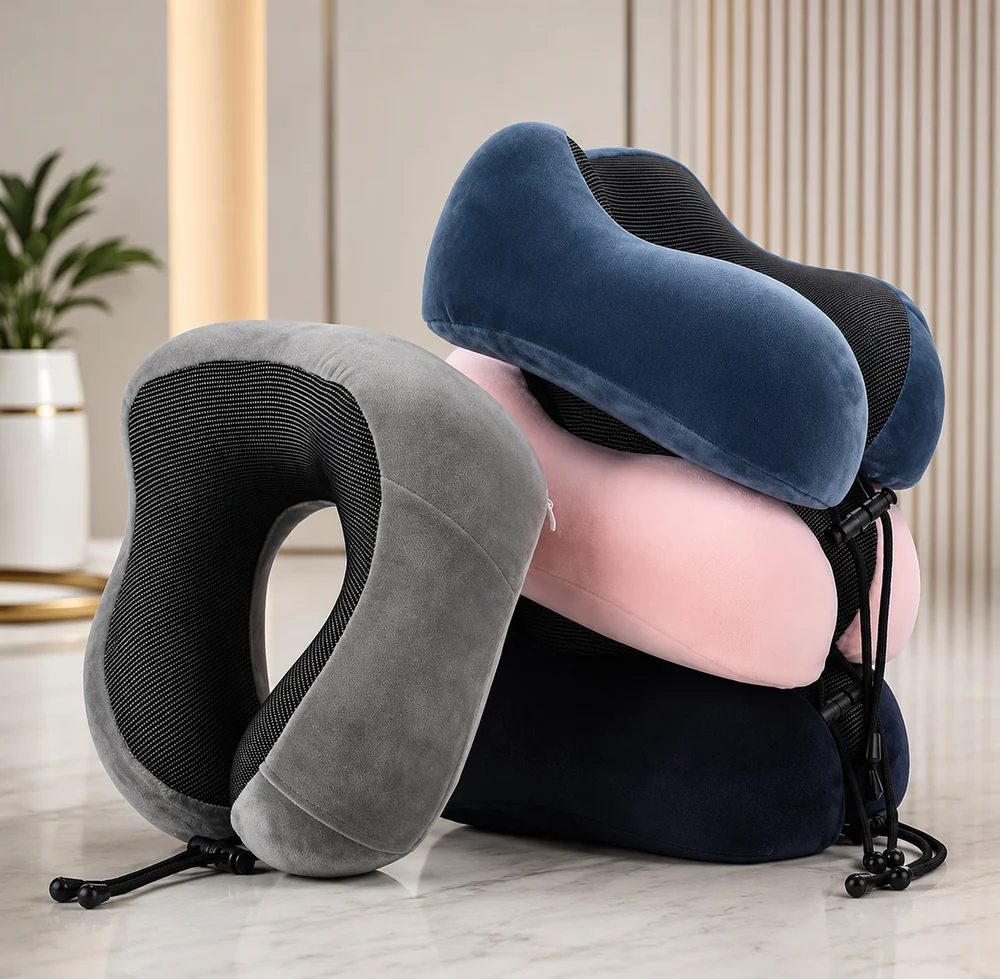
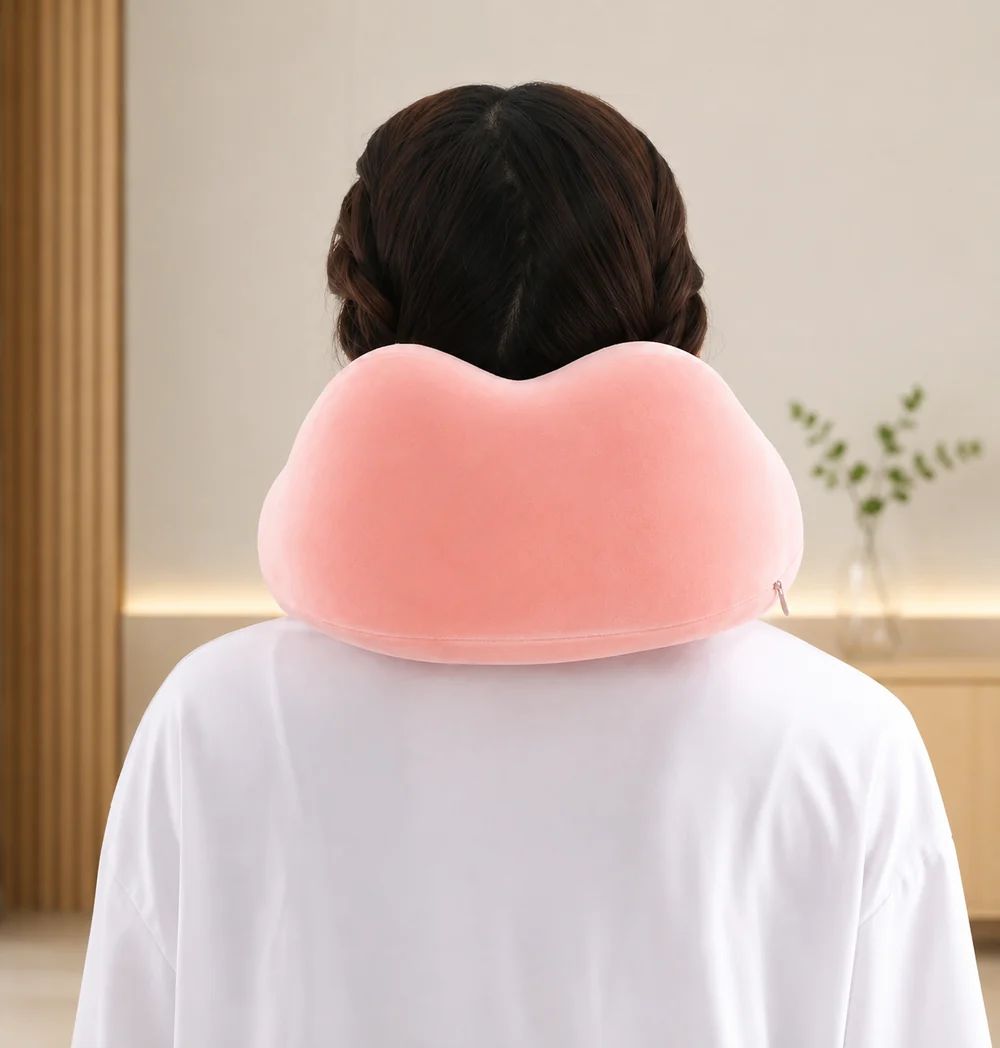

Why most travel neck pillows do nothing
The test takes three seconds: put the pillow round your neck and tip your head firmly to one side. If your ear reaches your shoulder, the material has already collapsed with nothing on it. In the air, with the weight of your head and tiredness on top, it will do the same — only worse.
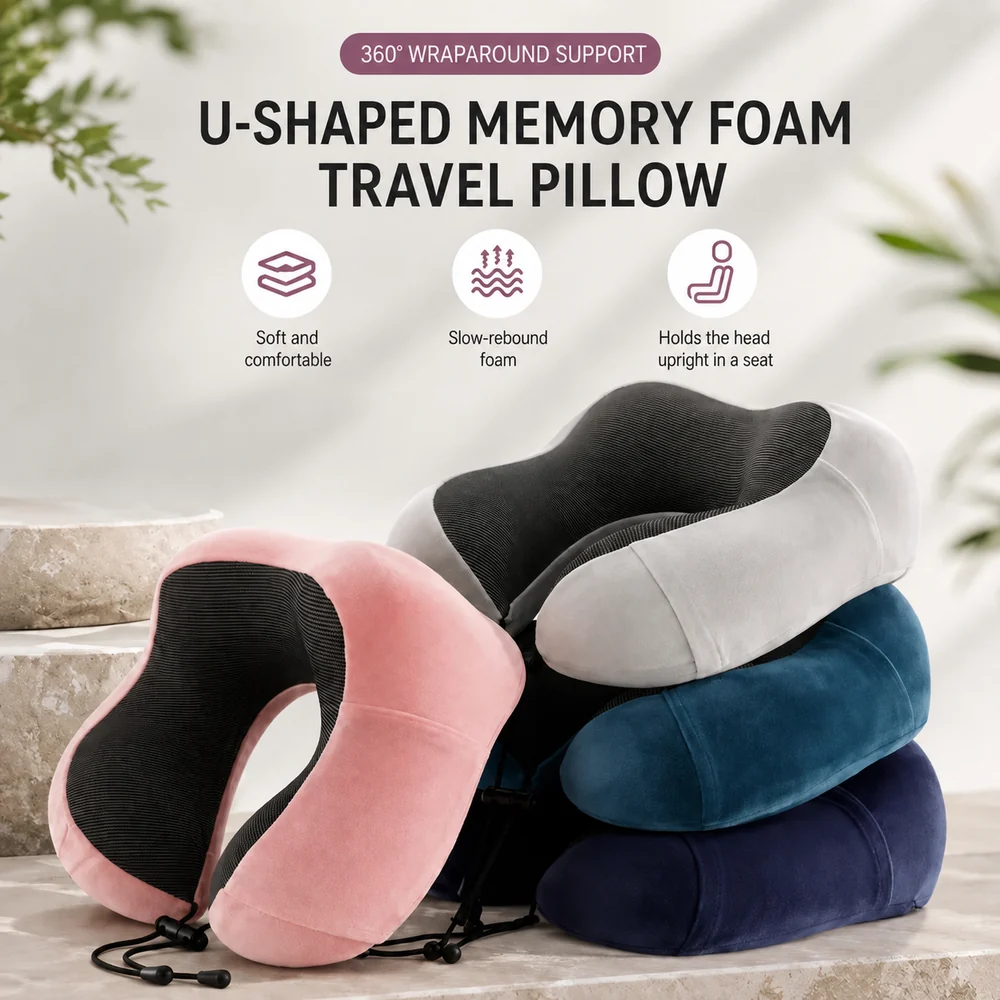
This is where the materials part company. Microbeads feel pleasant and weigh almost nothing, but they shift under pressure: the pillow hollows out exactly where it should resist. Inflatables depend on how hard you blow them up — too much and they push the head forward, too little and they hold nothing — and they deflate slowly over a long flight. Memory foam compresses and then holds: it is the only one that keeps its height under a sustained load, which is precisely what a travel pillow is for.
What happens when the head falls
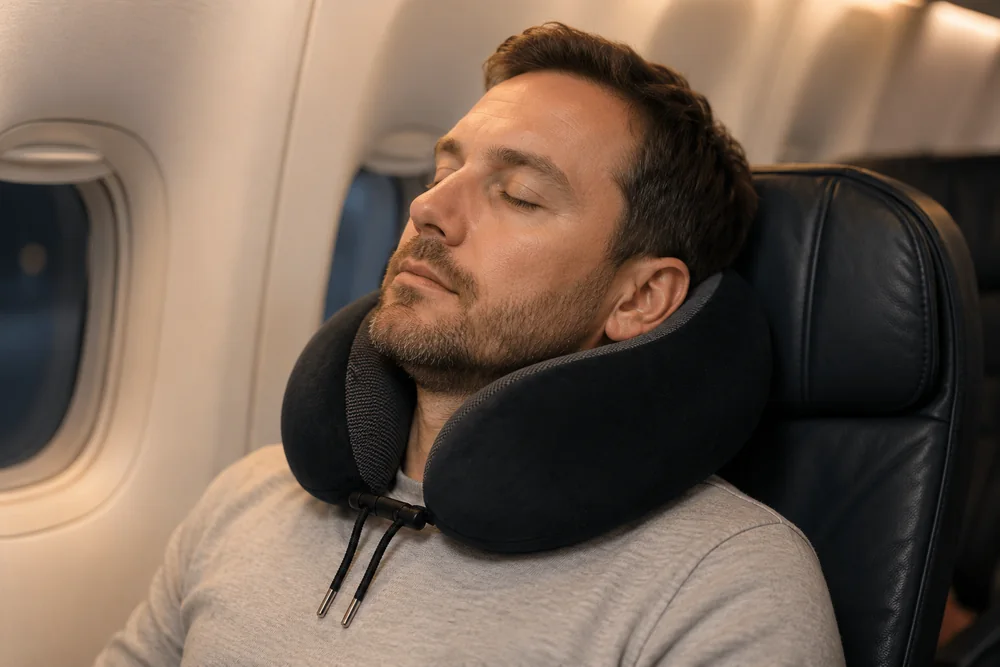
Awake, your neck muscles hold your head without you thinking about it. As you fall asleep they let go — and the head goes: forward, chin to chest, or sideways, ear to shoulder.
Either way, the falling sensation wakes you before deep sleep sets in. That cycle is why you can spend eight hours with your eyes shut on a plane and arrive having slept none of it. The pillow does not send anyone to sleep: it removes the reason you keep waking up.
Height matters as much as material
Too low and the pillow blocks nothing. Too high and it pushes the head forward, creating the very tension you were trying to avoid. Once it is on, your head should stay in line with your torso, not shoved forward.
On broad shoulders a standard model often sits too low; on a slighter frame the same one feels bulky. This is one of the few accessories where build genuinely changes the outcome — and one reason reviews of the same model contradict each other so often.
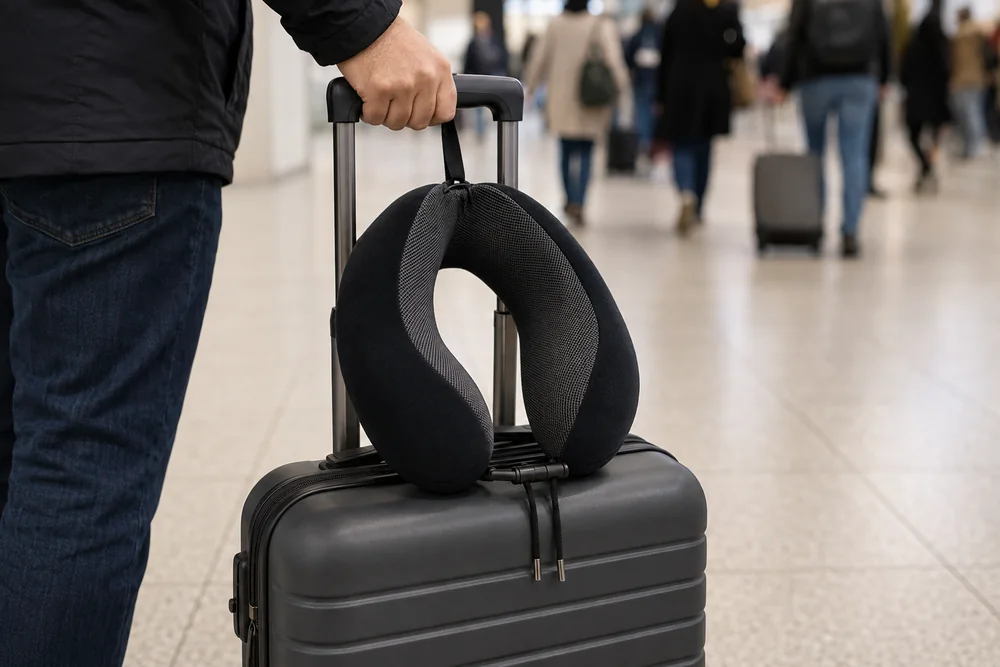
The cover, the thing nobody checks
A travel pillow gets dirty fast: airports, seats, the bottom of bags. Foam never goes in a machine — so if the cover does not come off, the thing is unusable within months.
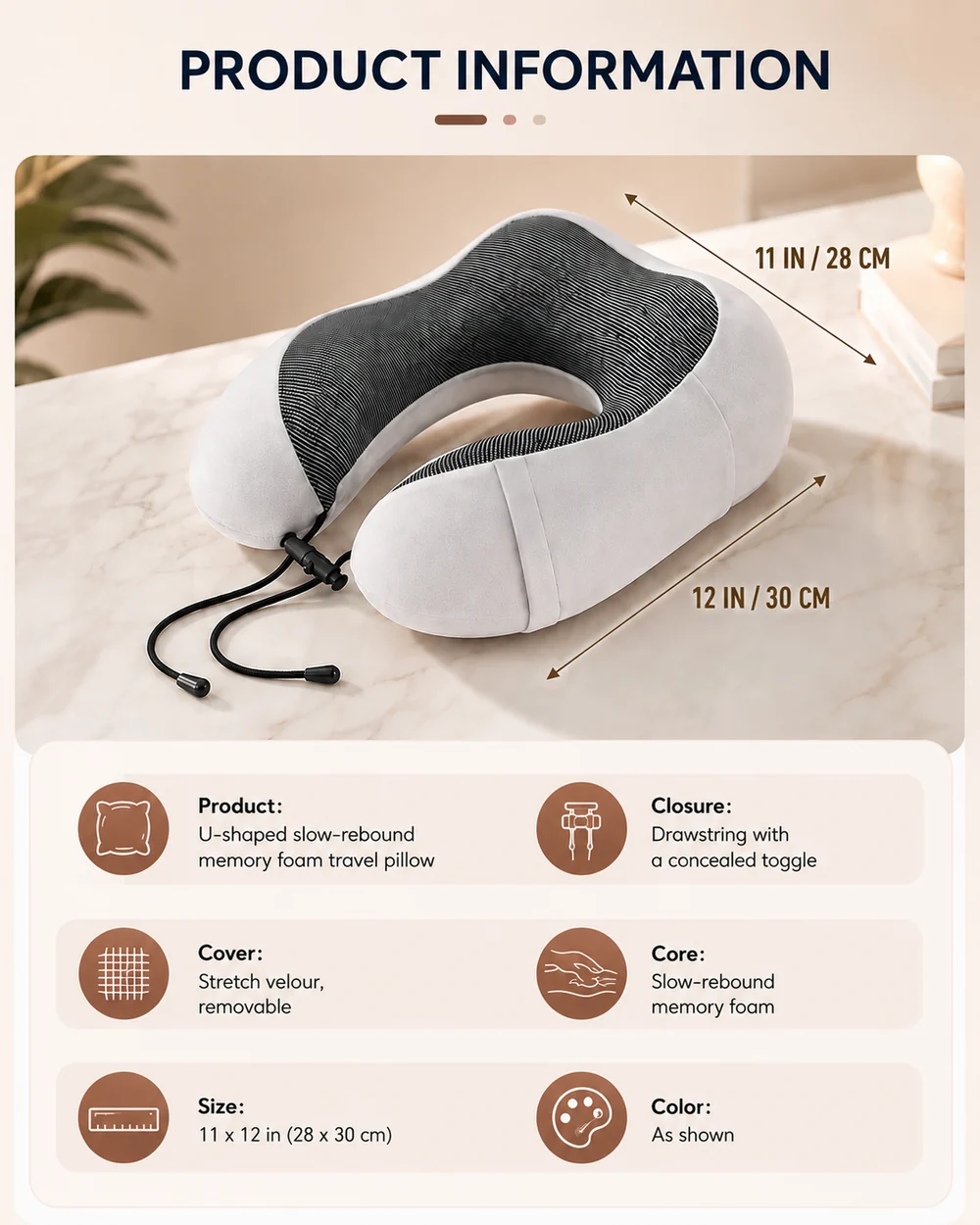
This one has a zip along its full length: the cover comes off, washes at 30 °C and dries flat. It is a detail at the moment of buying, and it is what decides how long the pillow lasts.
How to wear it
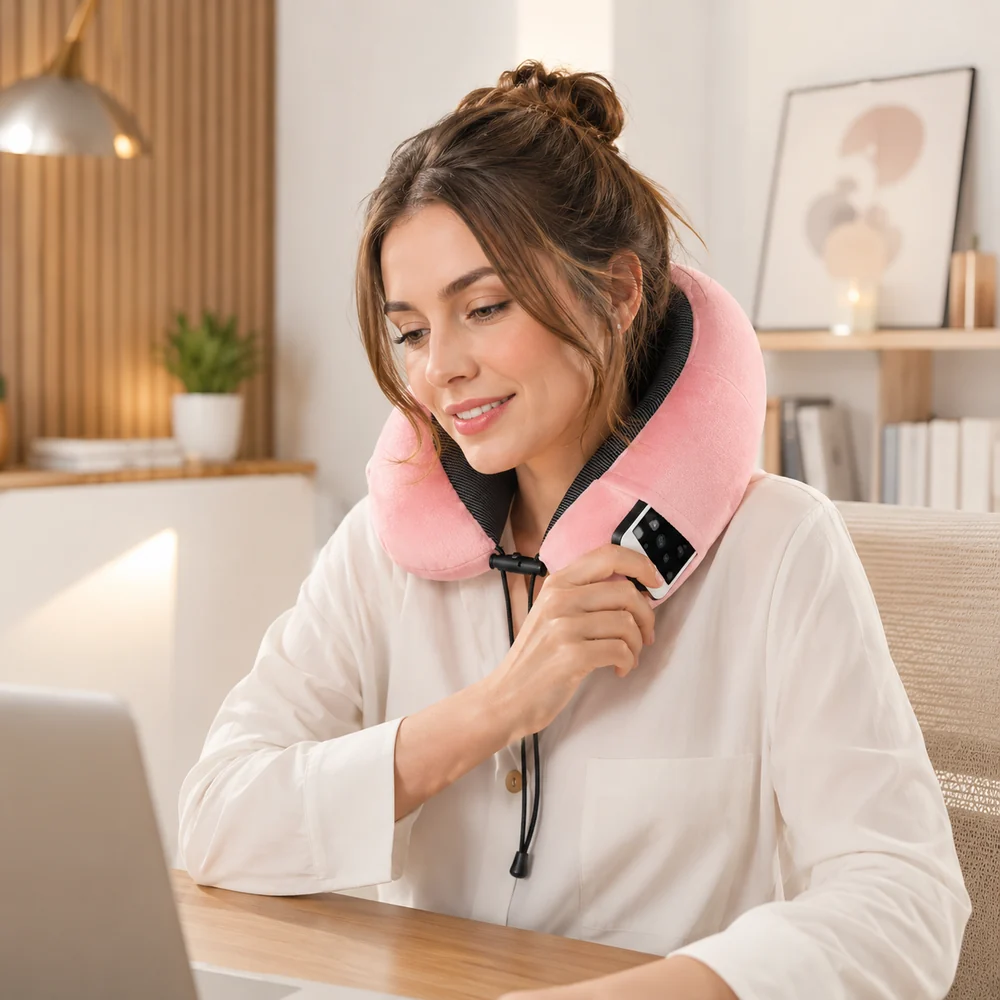
The commonest mistake is a single gesture: the opening goes behind your neck, the thick part at the front, under your chin. Worn the other way round — opening at the front — it holds nothing, and that is how most travellers wear it.
Against the window, shift it so the thickest part sits on the side your head falls toward. That single adjustment is what changes a night in the air.
Our guides cover the rest: how to wear it, how to sleep on a plane, and which seat to choose.
The broader question — whether travel pillows work at all — turns almost entirely on which of those three materials is inside the one you own.
Frequently asked questions
How travel neck pillows work on flights
A U-shaped pillow works only if it is worn the right way round and if the filling holds. Put the opening behind your neck and the thick part at the front, under your chin — the opposite of what most travellers do. Worn backwards, it stops nothing, which is why so many people conclude these pillows are useless.
Does it flatten during the flight?
That is the failing of microbead fillings, which shift under pressure and hollow out exactly where they should resist. Memory foam compresses and then holds: it keeps its height under the weight of a head for several hours.
How much room does it take in a bag?
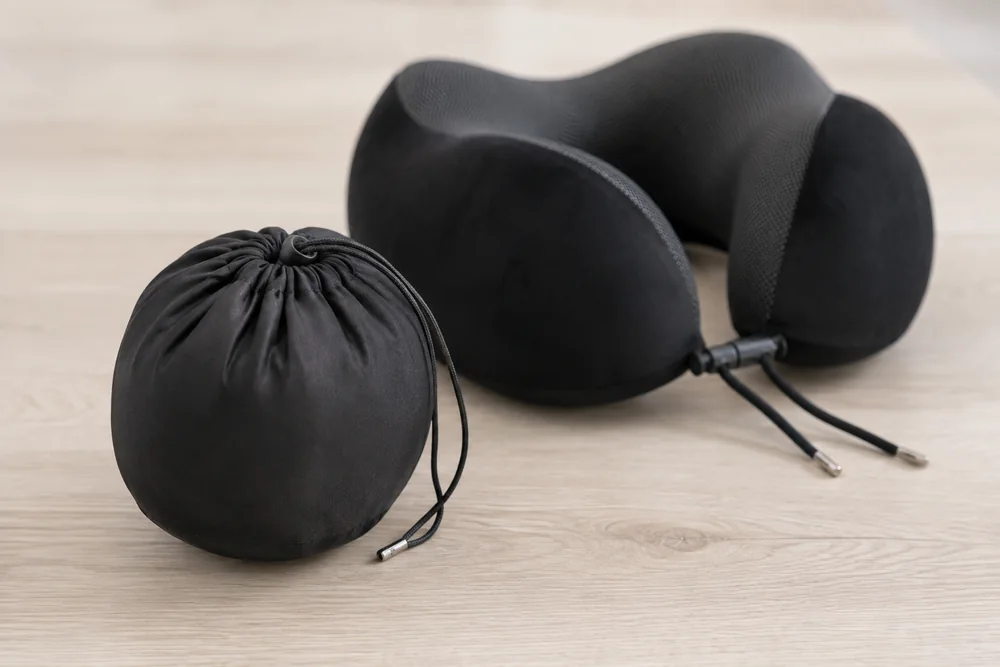
It compresses into its carry pouch and takes a few minutes to recover its shape. Take it out at boarding rather than at the moment you want to sleep.
Can you wash it?
The cover unzips and washes at 30 °C, dried flat. The foam itself never goes in a machine.
Does it work in a car or on a train?
Yes — in the passenger seat of a car, and on trains, where seats give no sideways support at all. Never while driving.
What is in the travel pack?
The pillow, a sleep mask and a pair of earplugs. Cabin noise sits around 85 decibels and the lighting is never fully off: those are the two other obstacles to sleeping on a plane.
How long is delivery?
Six to ten working days, shipping included, to the United States, Canada, the United Kingdom and Australia. A tracking number is sent the moment the parcel leaves.
What buyers say after using it
The comments and photographs published by buyers are on our reviews page.